

Do You Have A Construction Project We Can Help With?
ADUs & Prop 19 in San Diego: How to Add an ADU Without Blowing Up Your Family's Property-Tax Basis (2026)
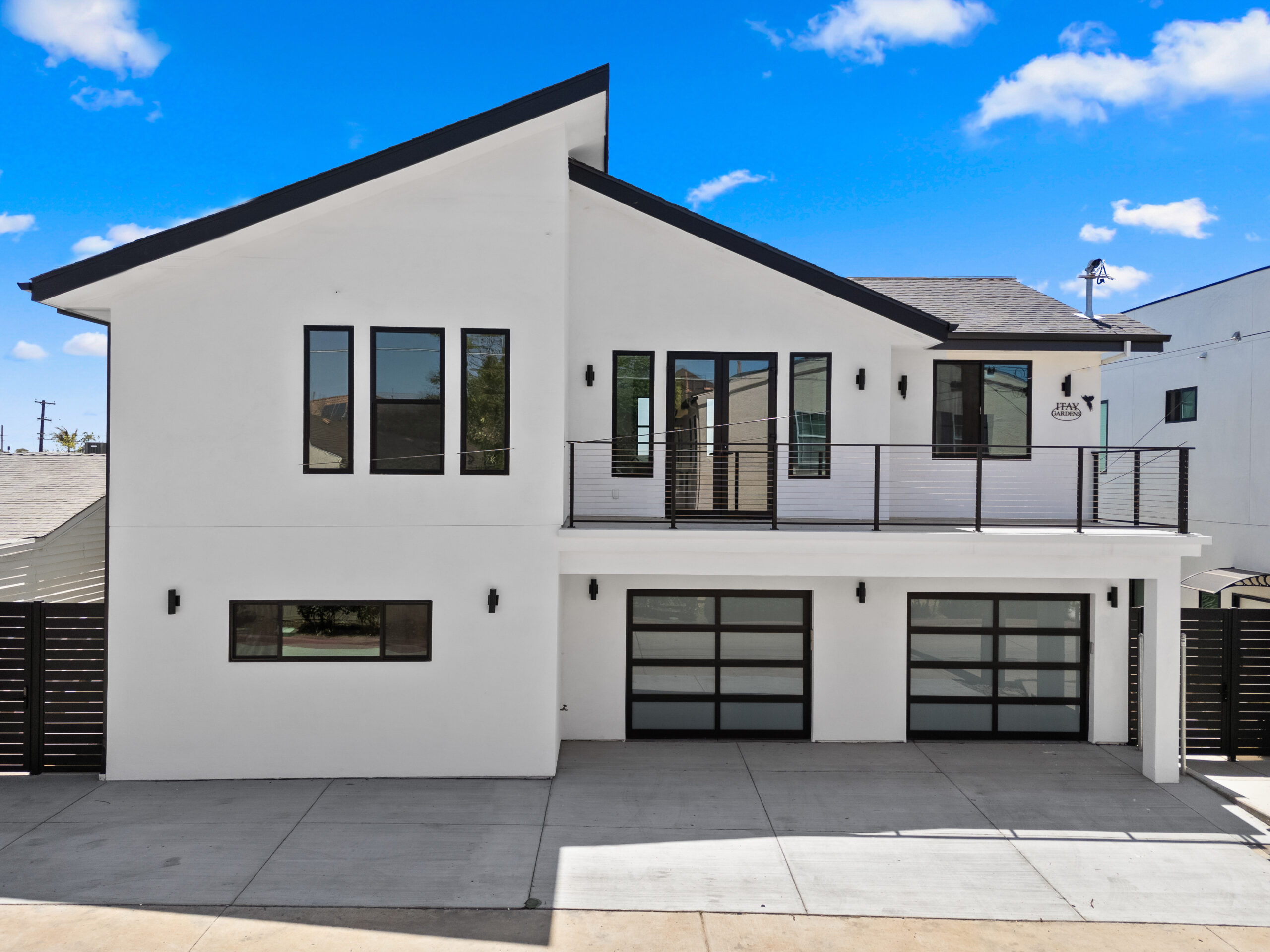
I'm Daniel Dechner at IL Total Design & Build. We design and build ADUs across San Diego, and there's one question that comes up constantly with families who've owned their home for decades — or who are about to inherit one: "If we build an ADU, or pass this house to our kids, what happens to our property taxes?"
It's the right question, because San Diego is exactly where it bites hardest. A home bought in 1995 might carry a Prop 13 tax basis under $400,000 while the house is worth $1.8M today. Handle the next step wrong and that low basis can vanish overnight — a tax bill that can triple or quadruple. Handle it right, and an ADU can actually be the tool that keeps the family home, and its low taxes, in the family.
Almost nobody connects these two things — ADUs and Proposition 19 — so here's the builder's-eye view of how they intersect in San Diego, what gets reassessed, and the mistakes that cost families the most.
Prop 19, in plain English
Two different things can change your property taxes: building something new, and transferring the property to someone else. Prop 19 is about the second one — what happens when a home passes from parents to children.
Before Prop 19 (under the old Prop 58), parents could pass a home — and even rental properties — to their kids and the kids kept the parents' low Prop 13 tax basis with few strings attached. Prop 19, effective for transfers on or after February 16, 2021, tightened that dramatically:
- Only the parents' principal residence qualifies. Pure rental and investment properties no longer get the exclusion.
- The child has to actually live there. The child must make the home their own principal residence — generally moving in within one year and filing for the homeowners' exemption — or the home is reassessed to full market value.
- There's a value cap. The protected basis only stretches so far. The child keeps the parents' factored base-year value unless the home's market value at transfer is more than roughly $1,044,586 above that basis (that's the figure for transfers from Feb 16, 2025 through Feb 15, 2027; it adjusts over time). Anything above that cushion gets added to the new assessed value.
Translation for San Diego: if your family's home has a very low basis and a high market value — which describes a huge share of homes here — an inheriting child can keep most of that low tax bill, but only if they live in the home and only up to the cap.
The ADU Quick Facts (San Diego)
| Does building an ADU reassess my whole home? | No. Only the new ADU's added value is assessed at today's rate. Your existing home keeps its Prop 13 basis (a "blended" assessment). |
|---|---|
| Typical tax increase from an ADU | Roughly $1,200–$3,000/year, based on the ADU's construction value — not your home's market value. (Confirm with the Assessor.) |
| Does building an ADU trigger Prop 19? | No. Prop 19 is about transferring the property. Building is "new construction," assessed separately. |
| Can an ADU help preserve a low basis across generations? | Often yes — by making it practical for a child (or parent) to live on the property as a principal residence. Confirm the structure with your estate attorney. |
| What blows up the basis? | Inheriting and not moving in within ~1 year, the home's value exceeding the cap, or treating it as a rental rather than a principal residence. |
Situation 1: You own your home and want to add an ADU
Good news first, because this is the most common worry and the answer is reassuring: building an ADU does not reassess your whole property. California only assesses the new construction — the ADU itself — at today's rate, and adds that to your bill. Your main home keeps its Prop 13 basis. That's why a homeowner with a $350,000 basis can add an ADU and see their tax go up by maybe $1,500–$2,500 a year, not jump to a reassessment of the whole property.
The forward-looking Prop 19 angle
Here's what almost no one plans for: the ADU you build today can set up a clean Prop 19 succession tomorrow. If you build an ADU so an adult child lives on the property — or so you can downsize into the ADU and a child takes the main house — you're creating the "principal residence" living arrangement that Prop 19 rewards. When the home eventually transfers, a child who already lives there as their principal residence is in the best possible position to keep your low basis (within the cap). Talk to your estate attorney about titling and timing, but the physical setup is something we build.
Situation 2: You're inheriting (or planning to pass down) a San Diego home
This is where an ADU goes from "nice to have" to "financial strategy." The hard part of Prop 19 is the move-in requirement: to keep the parents' basis, a child has to make the home their principal residence. For a lot of families that's not simple — there are multiple siblings, the heir already has a home, or aging parents still want to live there.
An ADU solves the physical version of that problem:
- Age in place + succession. Build an ADU now so parents can comfortably stay on the property. The adult child moves into the main home as their principal residence. The family is together, and the principal-residence arrangement that Prop 19 looks for is already in place before any transfer.
- The reverse. Parents move into the ADU; the child takes the main house as their principal residence. Same outcome.
- Keeping the home in the family. For families whose biggest asset is a decades-held San Diego home with an ultra-low basis, an ADU can be the difference between an heir being able to afford to keep it (low taxes preserved) versus being forced to sell because a reassessed tax bill is unaffordable.
The trap that costs the most
If a child inherits and doesn't move in within about a year — or treats the home purely as a rental — the principal-residence exclusion is lost and the home is reassessed to full market value. On a San Diego home that's been in the family for 25 years, that can mean a tax bill several times higher. And even when the child does qualify, the portion of market value above the ~$1.04M cushion still gets added. Plan for both before anyone signs anything.
One nuance to raise with your CPA: a rented ADU
Prop 19's exclusion is built around the home as the heir's principal residence. Renting out the ADU on an inherited property is a genuine wrinkle — how the Assessor treats a property that's part principal-residence and part income unit is exactly the kind of detail you want a tax professional to confirm for your situation, not something to assume. We flag it because we've seen families bank on rental income without checking the tax side first.
The Garcias own a Clairemont home, bought in 1998. Their Prop 13 basis is about $300,000; they pay roughly $3,400/year in property tax. The home is worth about $1.6M today.
Plan A — do nothing. When the parents pass, none of the three kids moves in within a year. The home is reassessed to ~$1.6M market value. The new tax bill lands near $17,000–$18,000/year — and the family often has to sell.
Plan B — build an ADU first. The parents add a detached ADU and move into it; their daughter moves into the main house as her principal residence. When the home transfers, because she already lives there as her principal residence and the value is within the protected range, the family keeps most of the low basis. The ongoing tax bill stays a fraction of Plan A — and the home stays in the family.
How we fit in
We don't give tax advice — but we build the thing that makes these strategies physically possible, and we're comfortable coordinating with your CPA or estate attorney so the design supports the plan. A few things we sort out at feasibility:
- Whether your lot can fit an ADU that works for multigenerational living (single-level, accessible, private entry).
- Realistic construction cost — which is what the Assessor uses to value the ADU portion. See our 2026 San Diego ADU cost guide.
- How to phase and finance it. See ADU financing in San Diego.
- Your city's specific rules, in our San Diego ADU regulations guide.
Planning an ADU around a family home?
Tell us your goals and your lot. We'll scope what's buildable and what it costs — and coordinate with your tax advisor so the design supports your Prop 19 plan. Free, no obligation.
Book a free feasibility check →Quick reference
- Building an ADU: only the ADU is reassessed; the rest of your home keeps its Prop 13 basis.
- Prop 19 transfer: a child can keep the parents' basis only if the home was the parents' principal residence, the child moves in as their principal residence (~1 year), and the value is within the cap (~$1,044,586 above basis for 2025–2027).
- ADU strategy: an ADU can create the on-site, principal-residence living arrangement that makes a Prop 19 succession work.
- Biggest risks: no move-in within a year, value above the cap, or a rented unit changing the principal-residence picture.
- Always: confirm specifics with a CPA/estate attorney and the County Assessor.
Frequently asked questions
Does building an ADU increase property taxes on my whole home in California?
Does building an ADU trigger Prop 19?
Can my kids inherit our San Diego home and keep our low property taxes?
How can an ADU help with a Prop 19 plan?
What happens if no one moves into the inherited home in time?
What if we rent out the ADU on an inherited property?
Is this tax advice?
By Daniel Dechner, IL Total Design & Build · CSLB #1058676 · (619) 404-0125. General information only, not tax or legal advice. Prop 19 figures reflect the 2025–2027 adjustment period and change over time — verify current amounts with the California State Board of Equalization and the San Diego County Assessor.
Book A Consultation
What are you thinking of doing? Let’s see if we can help.


